Self-learning SBC
Self Learning SBC
Use this page after every practice answer. Not before. These three tools only work when you have something real to check against.
Most students practise SBC and then move on. That is the wrong habit. The practice only becomes learning when you stop, check your answer against a standard, and identify exactly what was missing.
These three infographics are a self-improvement loop. Work through them in order — after every answer.
Parent Note
Let your child answer first — fully, without interruption. Then ask three questions: Did they give a personal example? Did they explain why it matters? Did they connect to someone beyond themselves? Those three questions cover the difference between Band 3 and Band 5. You do not need to know the curriculum to ask them.
Five minutes of honest self-review after each answer builds more than five extra practice questions ever will.
Student Note
“Practising without checking is just repeating your mistakes with more confidence.”
“After every answer, ask yourself honestly: did I just answer — or did I actually think?”
① Step 1 — Check Your Answer Against the 4 Components
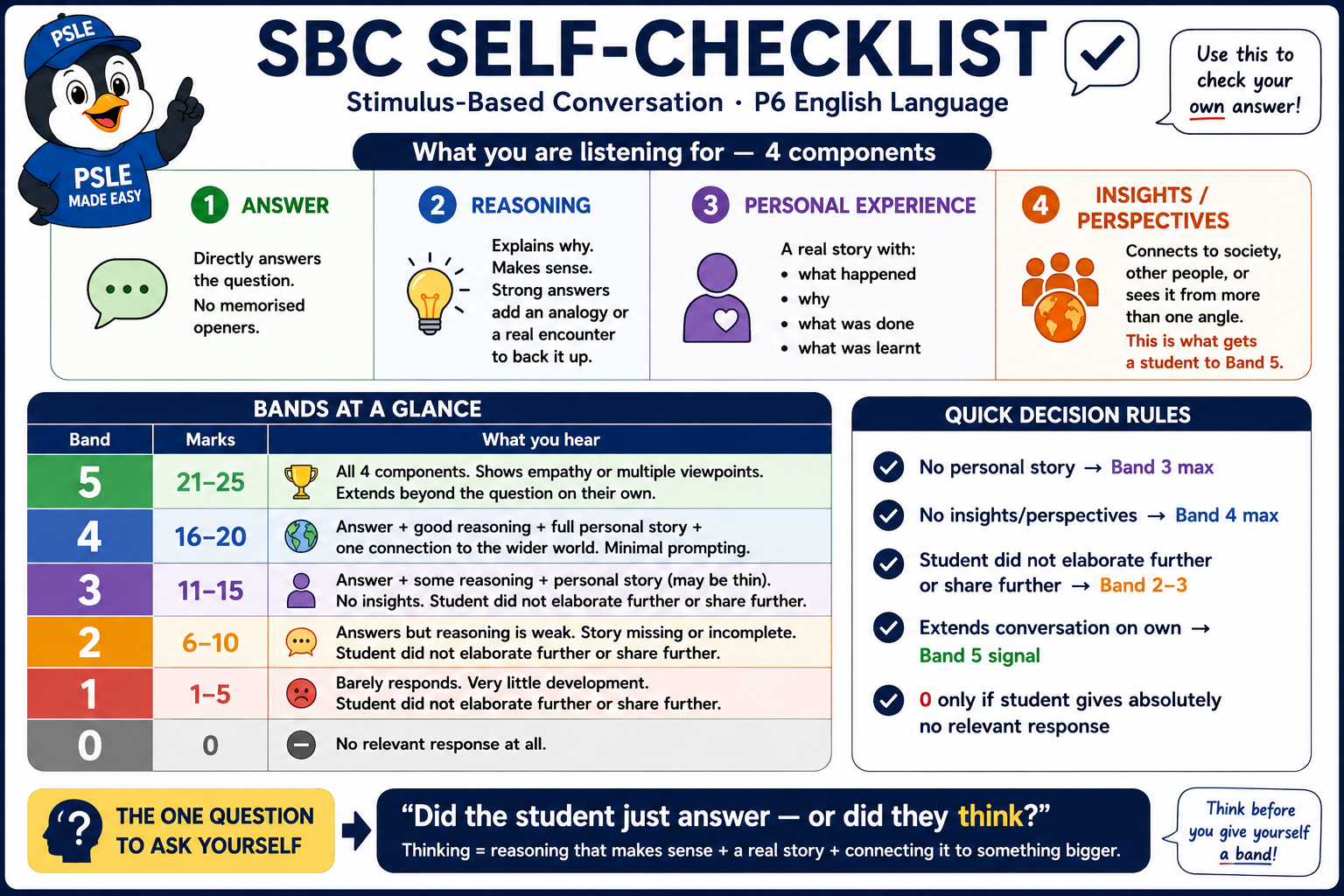
Use the SBC Self-Checklist (infographic above) immediately after you finish speaking. It shows the four components being assessed — Answer, Reasoning, Personal Experience, and Insights/Perspectives — and what each band actually sounds like.
Be honest. Most answers are strong on Answer and weak on Insights. Knowing which component let you down is the first step to fixing it.
The Quick Decision Rules on the right-hand side give you a fast band estimate. Use it as your starting point — not your final verdict.
“The one question to ask yourself: did I just answer — or did I think?”
② Step 2 — Identify What Was Missing and Rebuild Using PEEIC
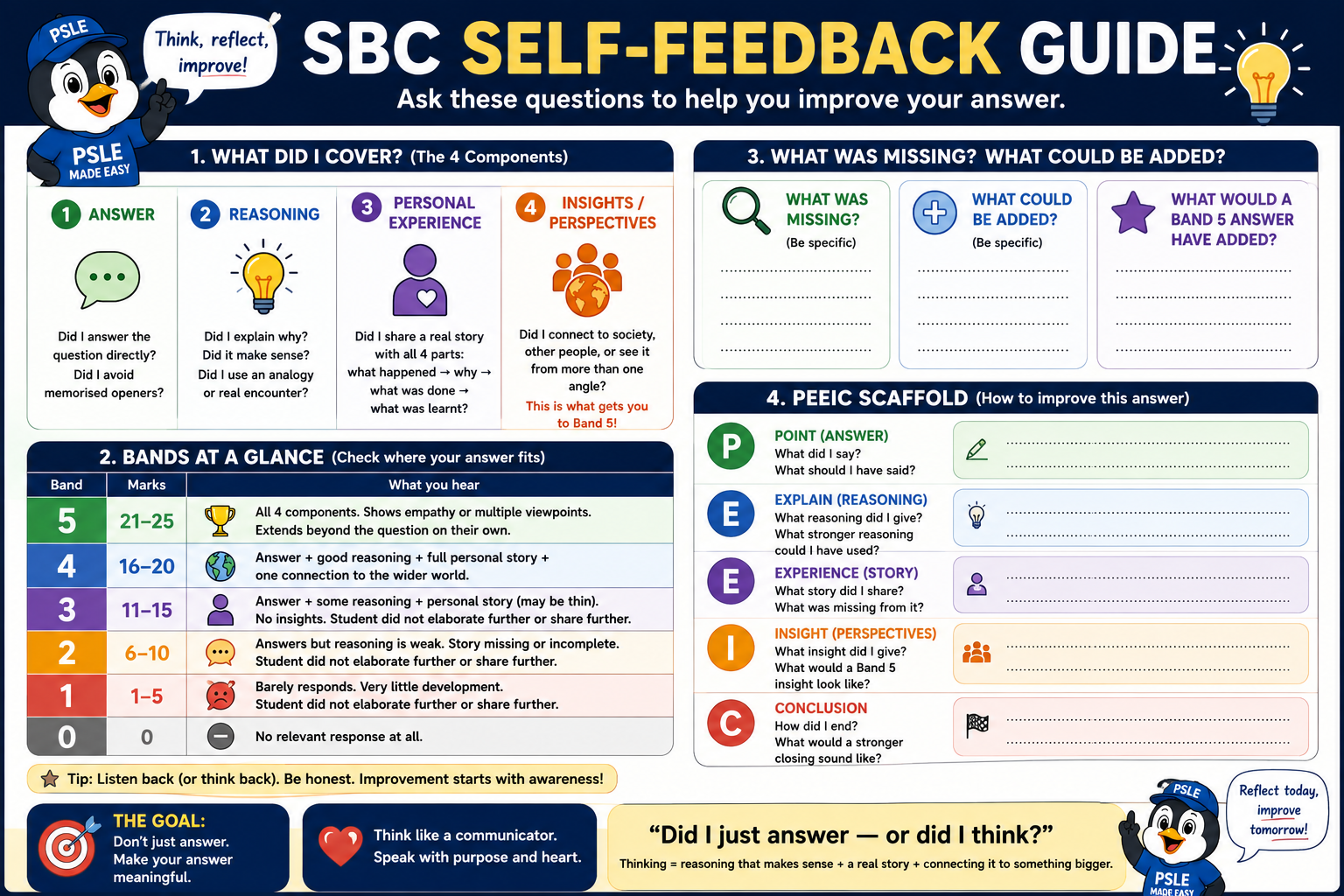
Use the SBC Self-Feedback Guide (infographic above) to do a proper review. It walks you through four questions in sequence:
- What did I cover? (tick off the 4 components)
- Where does my answer fit? (check the band)
- What was missing? What could have been added?
- How would I rebuild it using the PEEIC scaffold?
PEEIC stands for: Point → Explain → Experience → Insight → Conclusion. It is not a formula to memorise. It is a map of what a complete answer sounds like. When your answer feels thin, trace back through PEEIC to find where it stopped.
“Improvement starts with awareness. Listen back — or think back — and be honest about what was missing.”
③ Step 3 — Understand What Band 5 Insights Actually Look Like
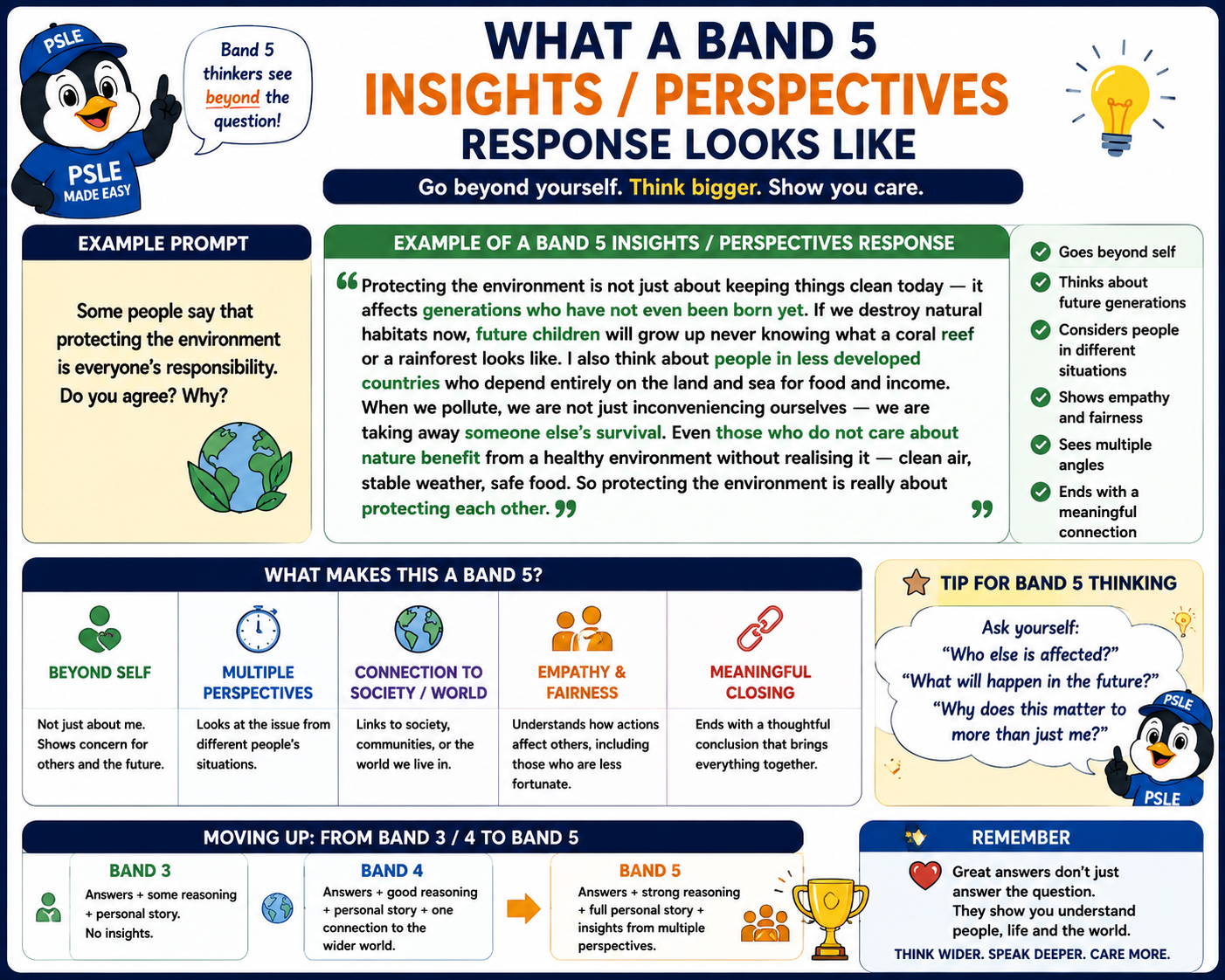
Insights and Perspectives is the component that separates Band 4 from Band 5. Most students know it exists — very few know what it sounds like in practice.
The infographic above shows a full Band 5 example response to a real question about protecting the environment. Study it carefully. Notice what it does:
- It goes beyond the student’s own experience to think about others — future generations, people in less developed countries.
- It connects to society and the wider world, not just the individual.
- It shows empathy and fairness — understanding how actions affect those who are less fortunate.
- It ends with a meaningful conclusion that brings everything together.
The three questions that unlock Band 5 thinking are always the same: Who else is affected? What will happen in the future? Why does this matter to more than just me?
“Great answers don’t just answer the question. They show you understand people, life, and the world.”
“Answer. Explain. Example. Connect. That is how a strong oral answer is built.”