Primary School Educator · Creator of PSLE Made Easy
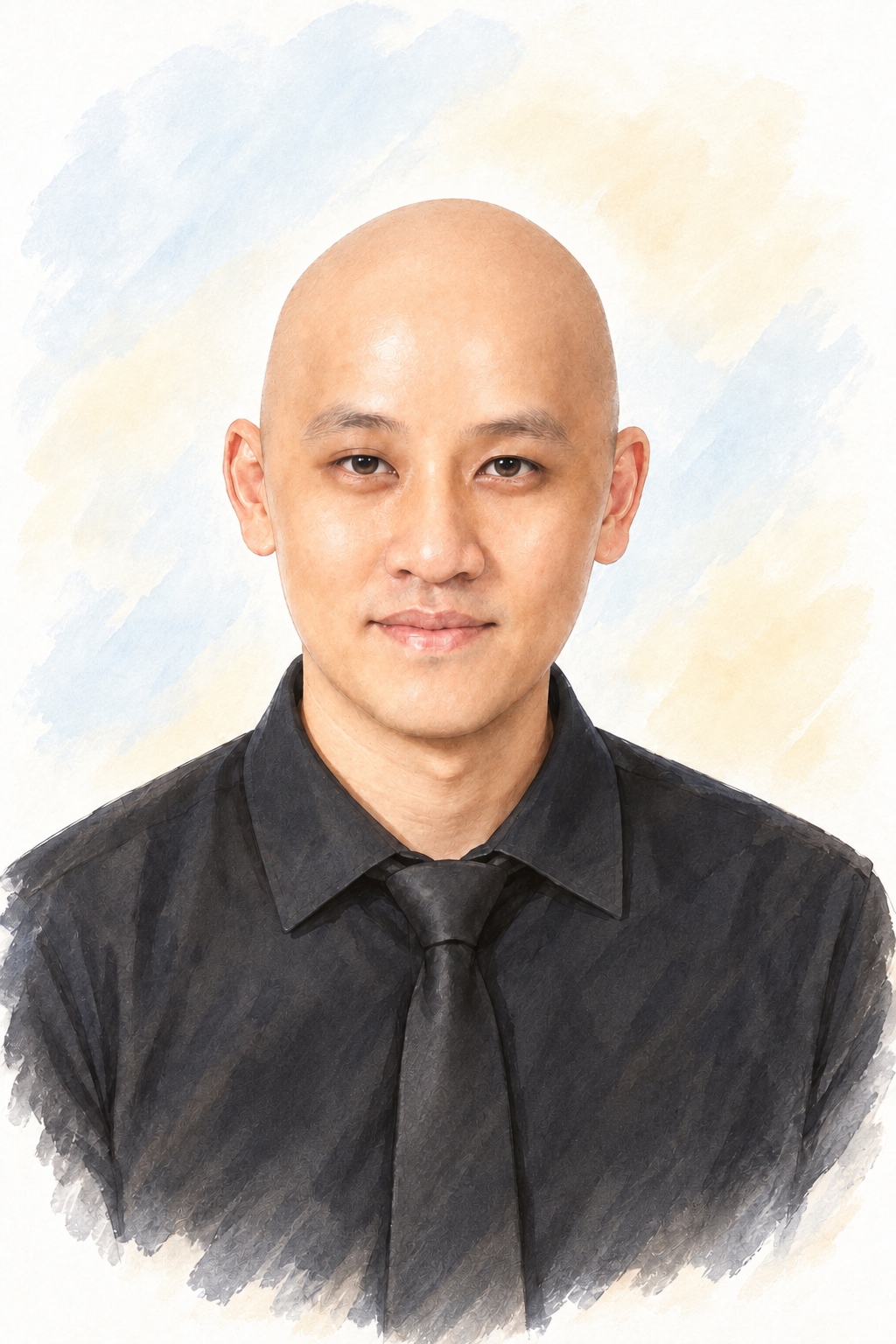
I am John, a primary school educator and the creator of PSLE Made Easy.
Over the years, I have taught pupils with different strengths, difficulties and learning habits. One thing has become increasingly clear to me:
Pupils do not always need more work. They often need to understand the work more clearly.
That is the idea behind PSLE Made Easy.
Not more tuition. Clearer learning.
My Teaching and Examination Experience
Alongside classroom teaching, I have served as a PSLE English Oral Examiner. I also have experience marking PSLE English examination scripts.
Together with my experience as a primary school educator, these responsibilities have shaped the way I approach teaching.
They have reinforced the importance of helping pupils:
- understand what a question is really asking
- recognise what makes an answer relevant
- notice the clues and details that matter
- explain their thinking clearly
- use language accurately and meaningfully
- recognise and learn from recurring mistakes
A pupil may know the content but still struggle to apply it to a particular question.
Teaching therefore involves more than explaining the correct answer. It means helping the pupil understand how to arrive at that answer and why it works.
Why PSLE Made Easy Exists
I do not believe that pupils necessarily improve simply because they complete more worksheets, attend more tuition or memorise more model answers.
Practice is important, but it becomes more useful when pupils understand what they are practising and why.
At PSLE Made Easy, I want to make the thinking behind learning more visible.
This means helping pupils recognise the structure of a question, identify the skills required, select a sensible approach and check whether their answer makes sense.
The goal is not merely to recognise a familiar question. It is to understand the thinking well enough to handle a different question independently.
How I Teach
I want the pupil to do the thinking.
Rather than immediately demonstrating a solution, I try to discover what the pupil already understands and where the difficulty begins.
My teaching process follows six steps:
The pupil tries the task first.
I look for the actual point of difficulty.
I ask the pupil to explain the thinking.
The reasoning becomes visible.
We identify the misconception, missed clue or weak process.
The pupil corrects, explains and applies the method again.
This process helps me understand not just whether an answer is wrong, but why the pupil arrived at it.
It also helps the pupil become more aware of their own thinking.
Teach the child to fish. The tutor should not become the child's permanent thinking system.
What This Looks Like Across Subjects
English — Understand and Communicate Meaning
English is not simply about remembering grammar rules, examination techniques or useful phrases. It is about understanding meaning and expressing thoughts clearly.
For example, in comprehension, I teach pupils to recognise what a question is asking, identify relevant clues and explain how the evidence supports their answer.
In grammar, pupils learn to notice language patterns and understand why a particular structure is appropriate.
In writing, pupils learn to develop relevant ideas, organise them logically and communicate them effectively.
Across reading, writing, listening and speaking, the underlying goal remains the same:
Understand meaning. Organise thinking. Communicate clearly.
Science — Know the Concept, Use the Evidence
Science requires sound knowledge of concepts, processes and scientific vocabulary. Memorising information has its place, but knowledge must also be applied.
I teach pupils to break down questions, identify the concept being tested and examine the evidence provided.
For multiple-choice questions, pupils learn to distinguish scientifically correct explanations from options that are partly correct, irrelevant or merely sound convincing.
For open-ended questions, I use a straightforward thinking routine:
Concept → Evidence → Relate
Identify the relevant scientific concept, use the evidence in the question and relate the explanation directly to what is being asked.
The aim is for the pupil to understand why an answer makes scientific sense rather than simply remember an answer from a previous worksheet.
Maths — See the Relationships
Many Maths problems become easier when pupils recognise the relationships between the quantities involved.
I encourage pupils to develop number sense, identify the whole and its parts, and translate words into mathematical representations.
Fractions, decimals, percentages and ratios may appear to be separate topics, but they often describe related ideas in different ways.
Instead of immediately searching for a familiar formula or model, pupils learn to ask:
- What is the whole?
- What are the parts?
- How are the quantities related?
- What do I need to find?
Once the relationship becomes clear, pupils can decide on suitable steps and carry out the calculations.
The numbers may change. The question may look different. The underlying relationship can still be recognised.
Practice With a Purpose
I believe pupils need practice, but practice should help them understand and improve.
When a pupil makes a mistake, simply giving the correct answer may not solve the underlying problem.
Was an important clue overlooked? Was a concept misunderstood? Was the right method applied incorrectly? Or was the explanation incomplete?
Different mistakes require different responses.
I prefer to identify recurring difficulties, address the thinking behind them and use targeted practice to check whether the pupil can apply what has been learned.
A useful practice session should leave a pupil with a clearer understanding of what to notice, what to do and what to check next time.
The purpose of practice is improvement, not simply completion.
How Online Coaching Works
Online tuition should not become a private webinar in which the teacher talks while the pupil watches.
I prefer the pupil's screen to be the main lesson space.
The pupil attempts questions, highlights clues, makes changes and explains decisions. I observe, question and provide guidance where needed.
When a new concept or method needs to be demonstrated, I may briefly share my screen to model the thinking before returning the task to the pupil.
This allows me to see how the pupil approaches a question rather than merely whether the pupil can follow an explanation.
The pupil should remain actively involved throughout the lesson.
How Parents Can Help
Parents do not need to become another tutor at home.
Sometimes, the most useful support is to listen as a child explains what they are thinking.
You might ask:
- What is this question really asking?
- Which clue helped you decide?
- Can you explain why your answer makes sense?
When mistakes occur, encourage your child to identify what went wrong and what could be done differently.
The aim is to develop the habit of thinking, explaining, checking and learning—not simply finishing another assignment.
The Goal Is Independence
Every pupil develops at a different pace. Some need more guidance, more explanation or more opportunities to practise.
That is perfectly reasonable.
However, support should gradually help pupils become more confident in making their own decisions.
I want pupils to become better at noticing important information, choosing suitable approaches, recognising mistakes and improving their own work.
The purpose is not to make a pupil need me for longer. The purpose is to help the pupil gradually need less help.
That is what clearer learning means to me.
Continue Exploring
For business enquiries: WhatsApp John →