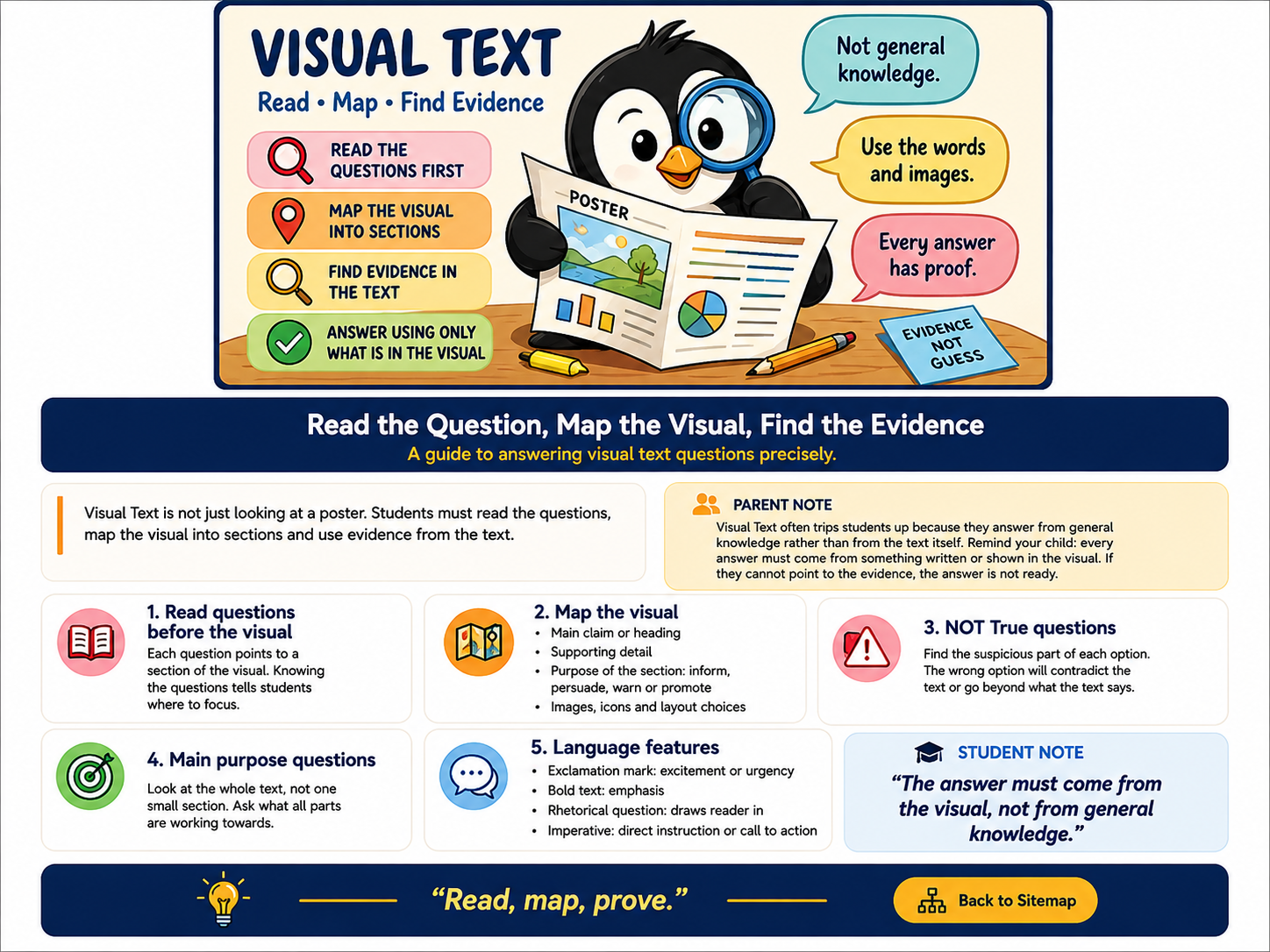
Read the Question. Map the Visual. Find the Evidence.
A guide to answering Visual Text questions precisely.
Visual Text is not just looking at a poster. Students must read the questions, map the visual into sections and use evidence from the text.
The answer must always come from something written or shown in the visual — not from general knowledge.

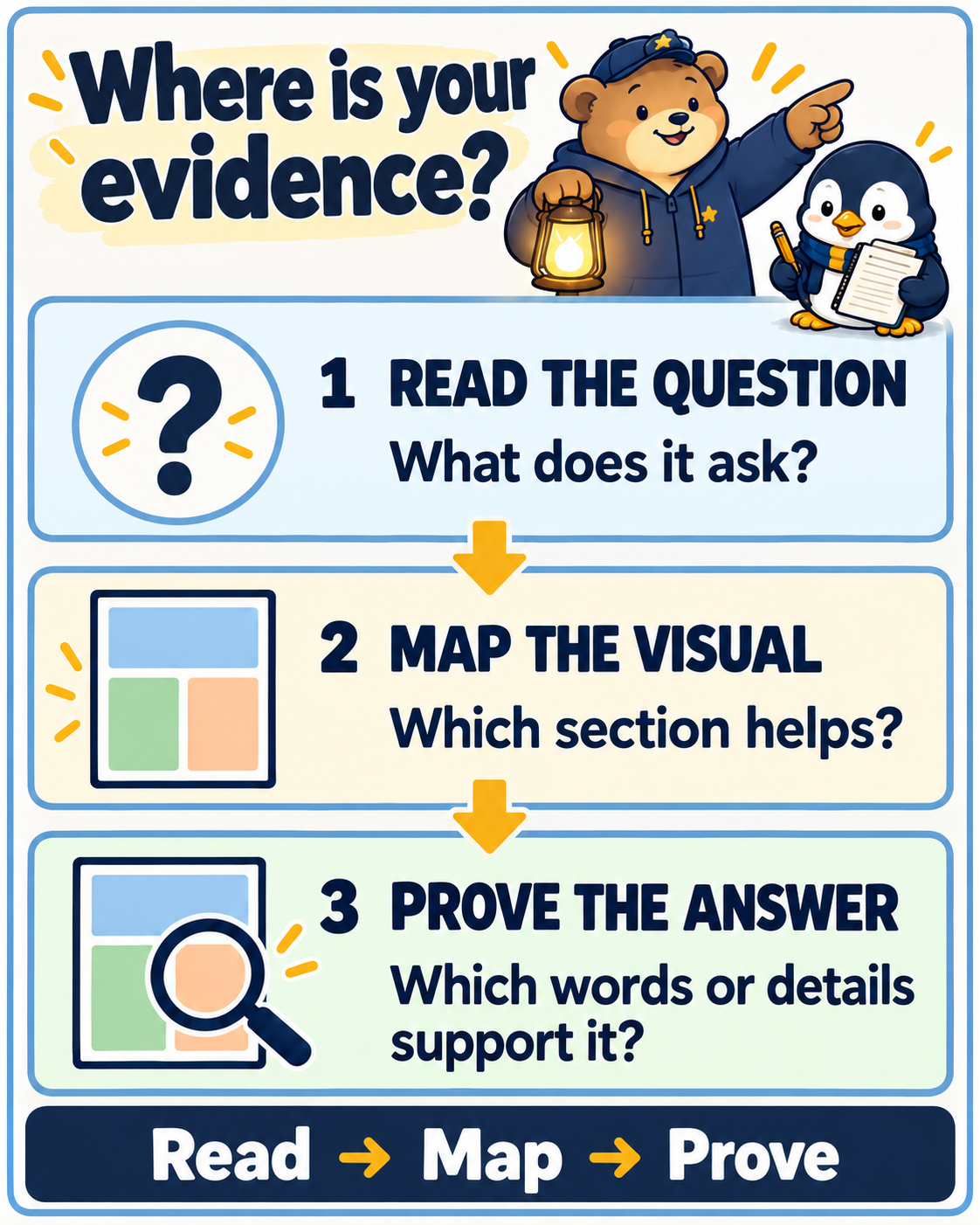
① Read the Questions Before the Visual
Each question points to a section of the visual. Knowing the questions tells students where to focus.
Read all the questions first. Then read the visual with those questions in mind. This turns passive reading into purposeful scanning.
“The questions tell you where to look. Use them before reading the visual.”
② Map the Visual into Sections
Before answering, break the visual into its parts:
- Main claim or heading — what is the central message?
- Supporting detail — what evidence or information is provided?
- Purpose of each section — to inform, persuade, warn or promote?
- Images, icons and layout choices — what do these add to the message?
“Map the visual before answering. Know what each part is doing.”
⑤ Language Features
- Exclamation mark — excitement or urgency.
- Bold text — emphasis on key information.
- Rhetorical question — draws the reader in, makes them think.
- Imperative — direct instruction or call to action.
“Every language feature is a choice. Ask why the writer used it.”
Check NOT True options
③ NOT True Questions
Find the suspicious part of each option. The wrong option will contradict the text or go beyond what the text says.
Check every word carefully — one suspicious word in an option can make the whole option wrong.
“In NOT True questions, find the option that contradicts or exaggerates. That is the answer.”
Find the main purpose
④ Main Purpose Questions
Look at the whole text, not one small section. Ask what all parts are working towards.
The main purpose is usually to inform, persuade, warn or promote. Choose the option that covers the whole visual, not just one part.
“Main purpose = what all parts are working towards together.”
Recognise different types of visuals
⑥ Types of Visuals You May See
- Posters
- Signs and notices
- Timetables and charts
- Infographics
- Brochures and flyers
Each type has different conventions. A poster persuades. A timetable informs. A notice warns or instructs. Know the type before answering purpose questions.
Original Visual Text teaching poster
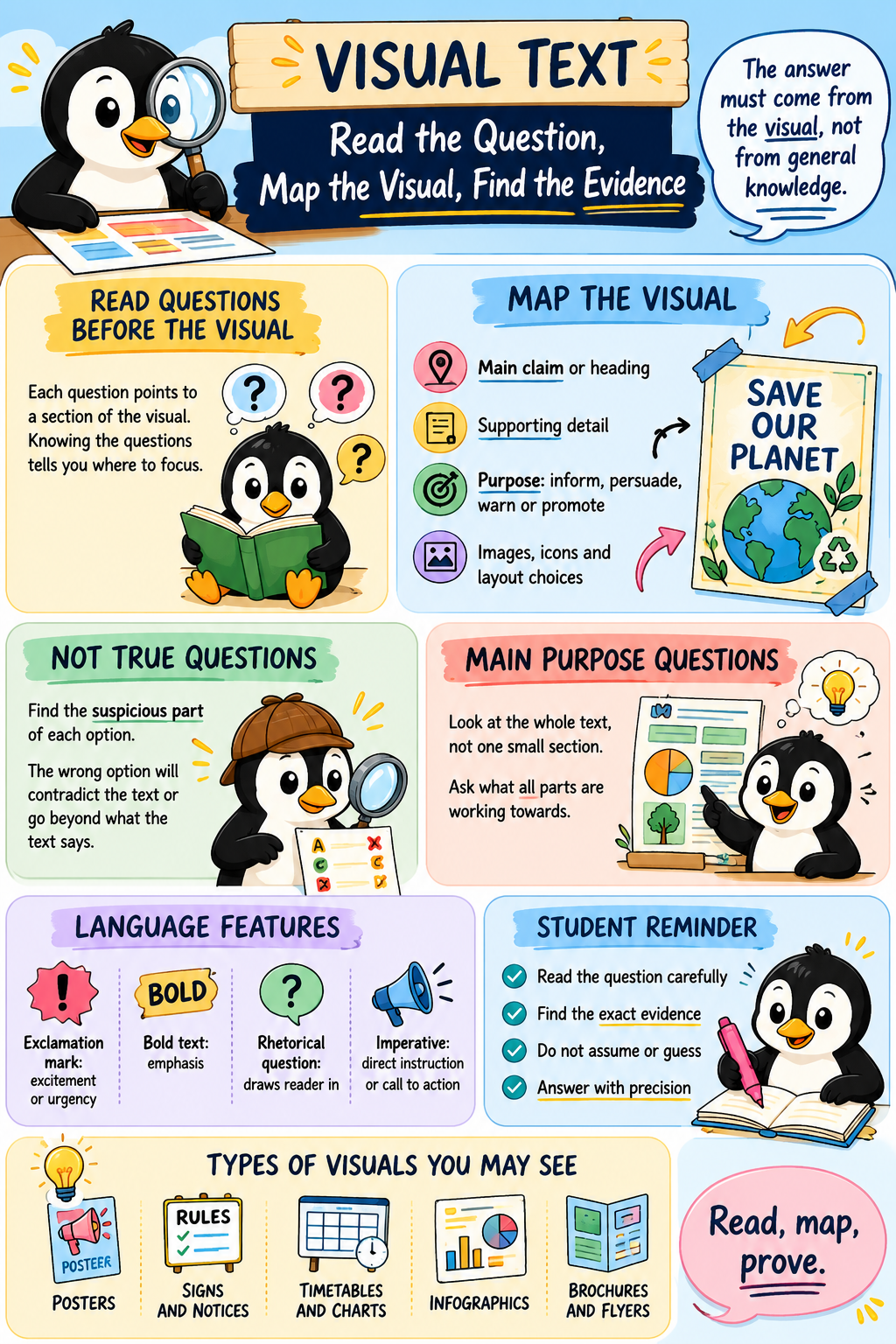
Original Visual Text page summary